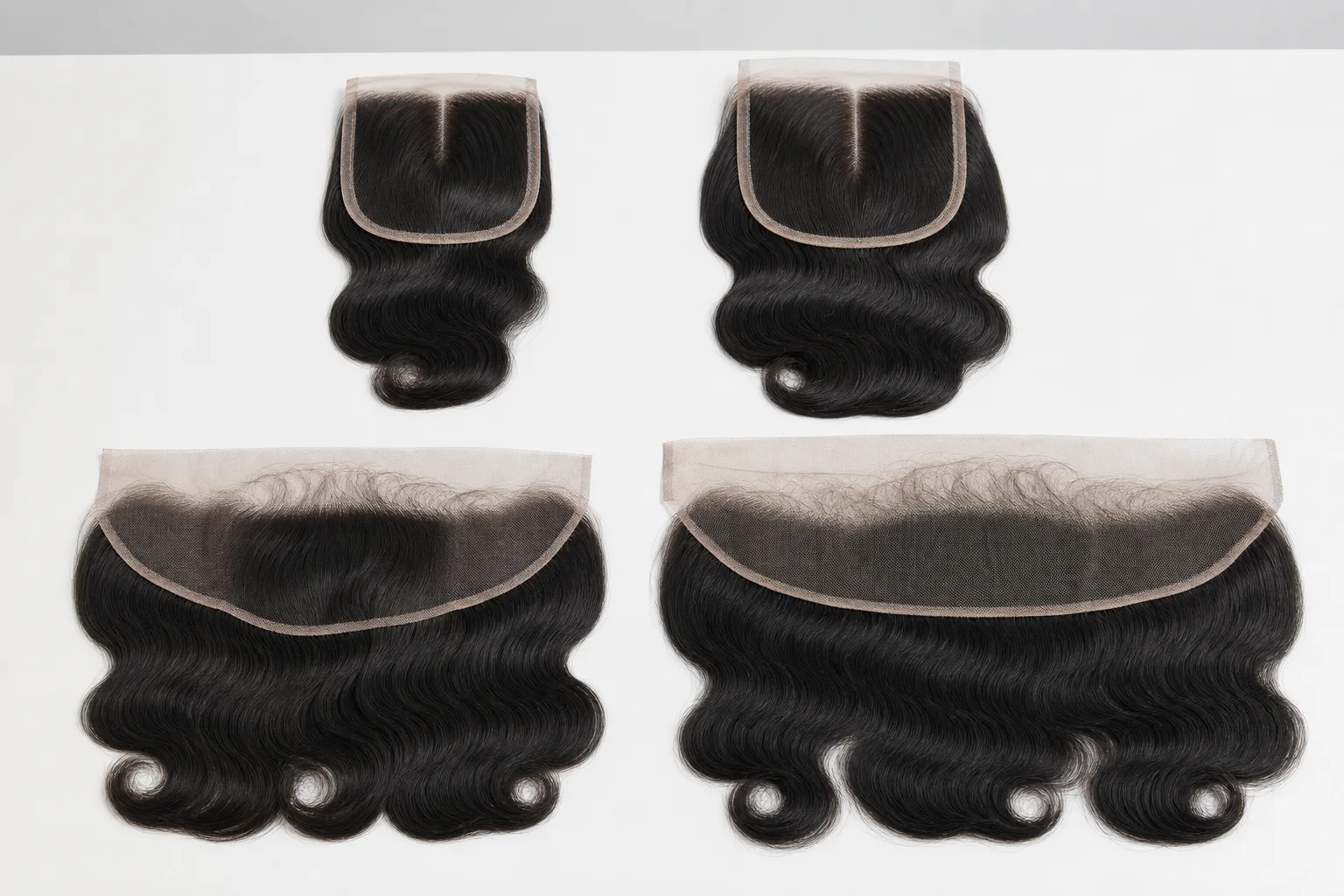
Compare lace closures and frontals by coverage, lace, parting, hairline, hair specification, samples, assortment planning, and reorder records.
Start With Coverage And Intended Use
A closure covers a more focused top or parting area, while a frontal extends the lace and hairline direction across a broader front area. The useful choice depends on the buyer's intended wig construction, installation workflow, customer expectations, and assortment role.
Record the required coverage, parting area, hairline direction, and professional workflow before comparing lace or hair details. This prevents different products from being judged as if they were the same specification.
Confirm Supplier Language And Construction
Product names and dimension descriptions can vary by supplier. Ask for the written coverage, lace direction, tone direction, edge construction, parting, hairline, knotting or ventilation direction, and sample reference behind each name.
Treat lace descriptions as specification fields rather than proof that one option is universally better. Compare the visible product and intended workflow through representative samples.
Connect The Lace Piece To Its Hair Range
Record texture, length plan, visible color direction, density direction, finish, hair reference, and the bundle or wig line the closure or frontal should support.
Review the proposed lace piece beside its matching product under consistent conditions. Keep accepted details and requested changes tied to the same sample record.
Approve The Product And Reorder Record
A dated approval should identify product type, coverage, lace and construction, parting or hairline direction, hair specification, matching reference, packaging, and every accepted change.
Use that record for production checks, packing, and a reorder conversation. Confirm current sample, order, and commercial details for the exact request rather than relying on an earlier general description.