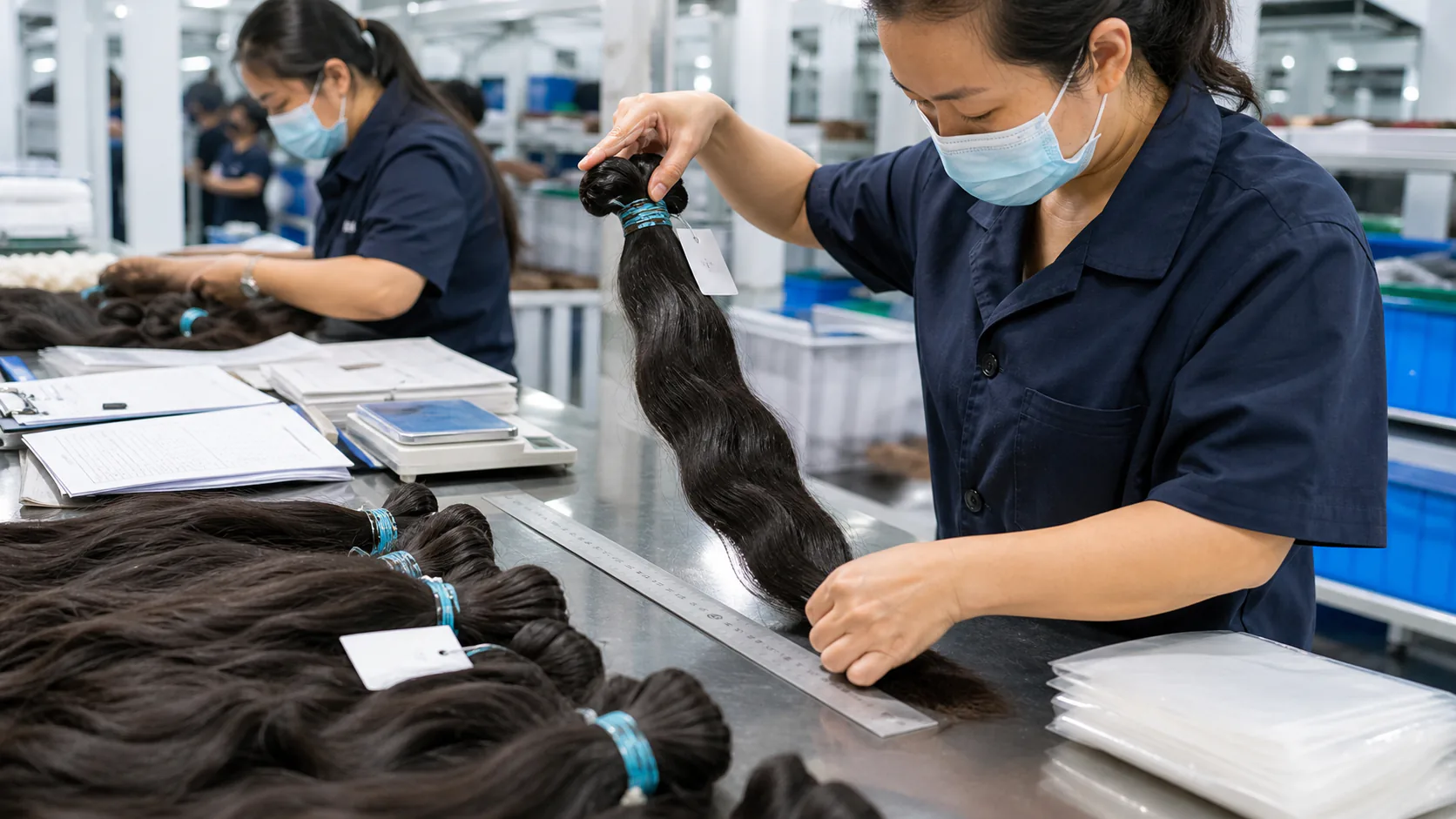
Use a documented human hair sample evaluation covering specification, construction, handling, packaging, comparison, and bulk-order approval.
Write The Evaluation Sheet Before Testing
Start with the product type, target market, construction, texture, color direction, lengths, weight or density direction, matching pieces, finish, and packaging expected for the order.
Use the same fields for every supplier sample. This keeps a lower price, a different construction, or a stronger finish from disguising a specification mismatch.
Inspect The Sample As Received
Photograph the package and product label, then record visible color, texture consistency, length direction, construction, lace or weft details, matching pieces, finish, odor observations, and packing condition.
Separate measured details from personal impressions. A note such as 'weft seam remained stable during the intended handling check' is easier to review than a general statement such as 'good quality.'
Use Handling Checks That Match The Product
Handle, wash, dry, comb, style, or install the sample only in ways relevant to the intended product and customer instructions. Record the method, products used, duration, and observations so another person can repeat the check.
Aggressive burning, chemical, or destructive demonstrations should not replace supplier documentation, construction inspection, and representative use. Different fibers, treatments, colors, and care methods can change the observation.
Approve A Bulk Reference, Not A Vague Result
List each accepted detail, requested adjustment, and unresolved decision. Ask the supplier to acknowledge which approved sample and written bulk specification will guide sorting, production, finished inspection, and packing.
Keep photographs, messages, the physical sample reference, and a dated approval record together. Reconfirm availability, sample cost, timing, MOQ, and pricing for the exact request before ordering.