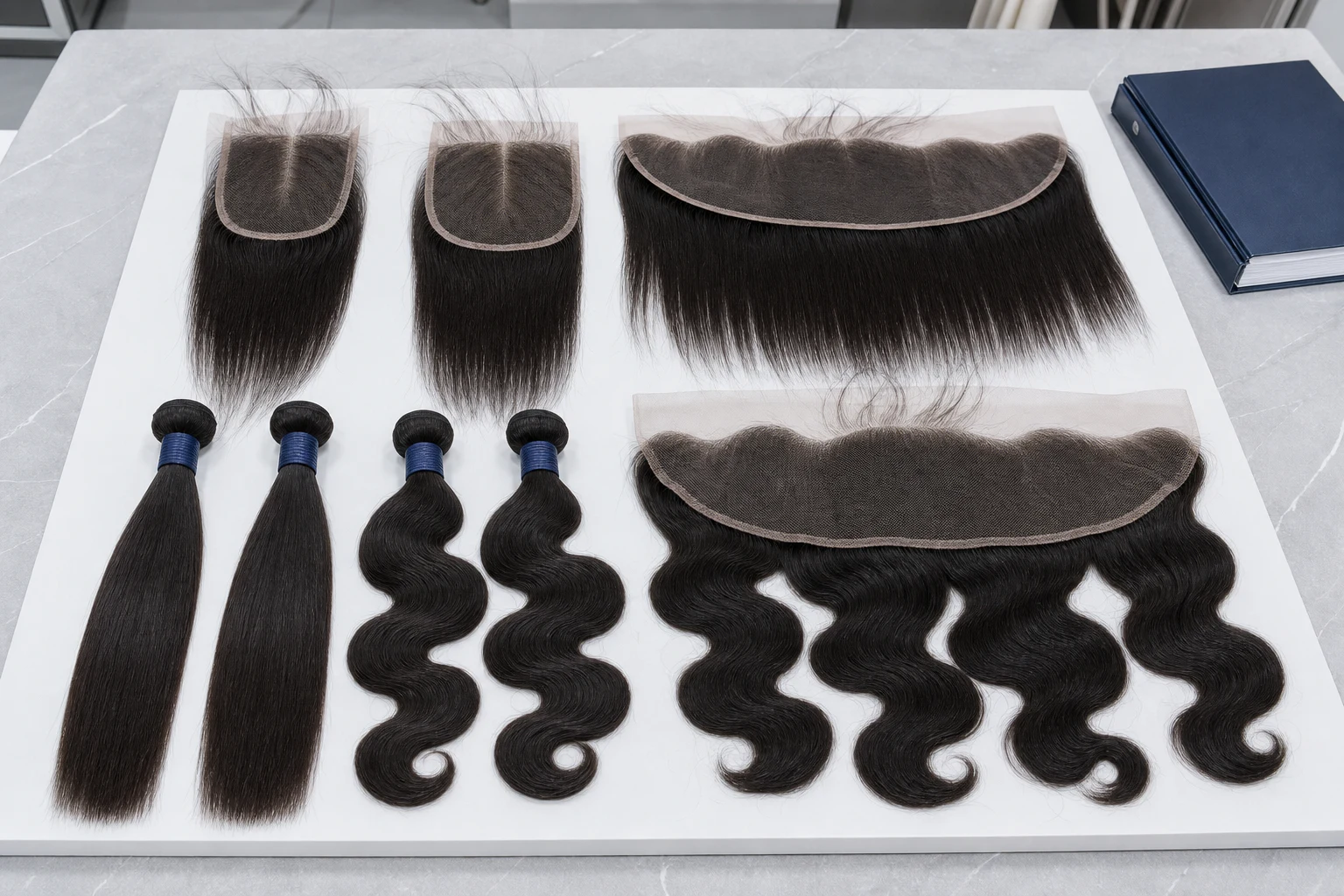
Match closures and frontals with hair bundles through texture, color, length, finish, lace, density, samples, packing, and set-approval records.
Write One Complete Set Specification
List the bundle texture, visible color direction, length plan, finish, hair specification, presentation, and sample reference together with the closure or frontal coverage, lace, parting or hairline, and density direction.
Keep each product identifiable inside the same set record. A shared marketing label does not confirm that separate items will match in visible color, texture pattern, finish, or construction.
Compare Representative Products Side-By-Side
Review the bundle and lace piece under consistent lighting and handling conditions. Compare visible color, texture pattern, finish, hair distribution, length direction, and how the lace piece transitions into the intended set.
Photograph and label the reviewed items, then separate accepted details from differences and requested changes. Keep the evaluation method appropriate to the intended product and buyer workflow.
Treat Length And Quantity As Set Decisions
The length plan should reflect the intended style, layering, texture, product construction, and buyer market. Record the requested relationship between the closure or frontal and each bundle rather than applying one universal formula.
Bundle quantity, product coverage, and final installation requirements depend on the buyer's product plan and professional workflow. Confirm them for the exact set under discussion.
Approve Packing And Reorder Details Together
The dated set approval should identify every bundle and lace-piece reference, accepted visible match, open decision, requested change, label, bag or box, care information, SKU direction, and carton instruction.
Use the same record for production checks, final set review, packing, and reorder communication. List later changes separately so the previous approval remains clear.