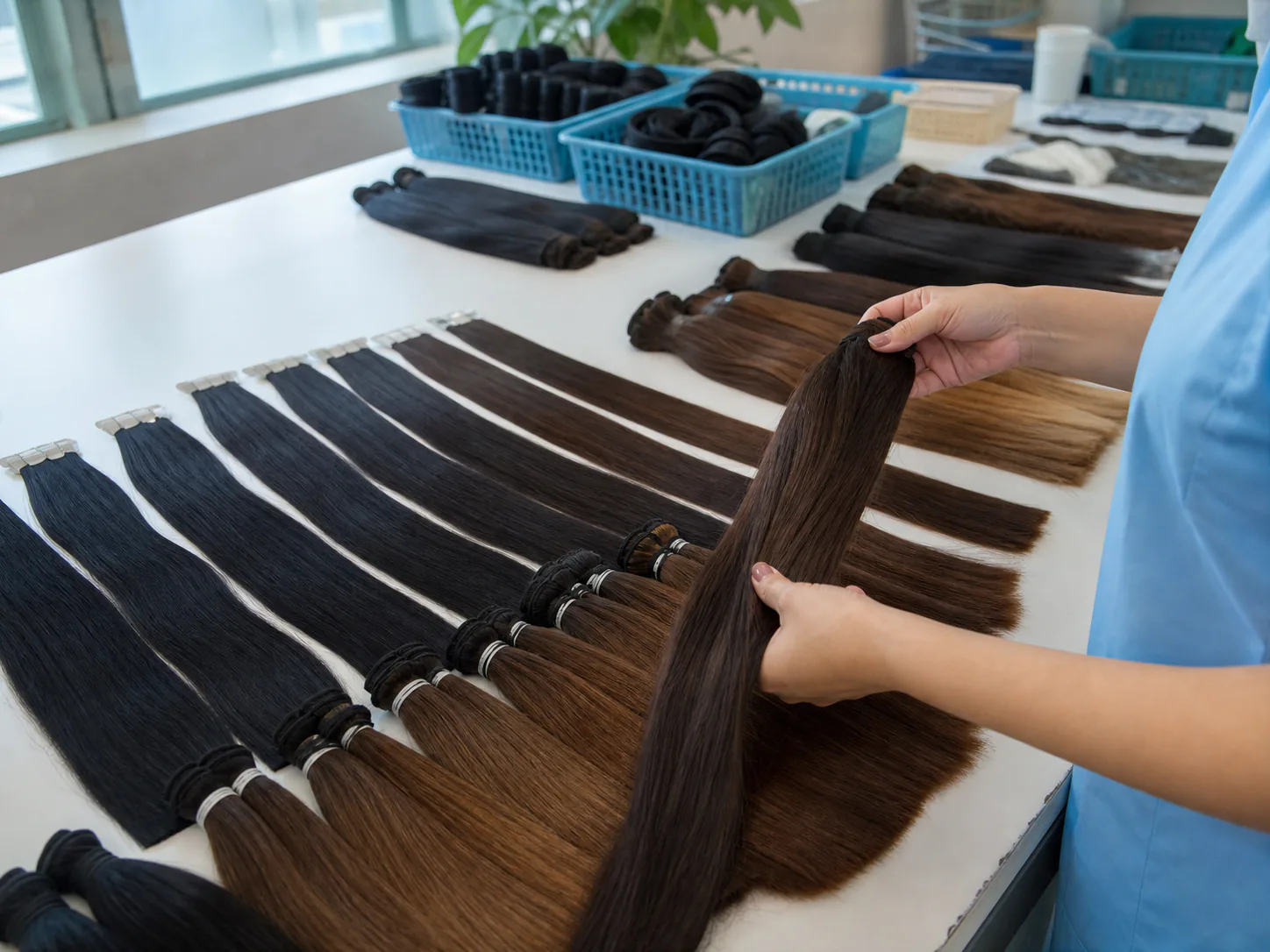
Compare tape-in, nano, flat tip, genius weft, invisible weft, and hand-tied hair extension directions through salon and distributor workflow, samples, packaging, and reorder records.
Start With The Salon Or Distribution Workflow
Ask which extension product direction fits the salon's service workflow for trained stylists or the distributor's assortment, sales, and fulfillment workflow. The buyer can describe the intended workflow, and the supplier can identify the construction details represented by the exact sample.
Tape-in, nano, flat tip, genius weft, invisible weft, and hand-tied labels are useful starting points, but their construction descriptions and product formats can vary by supplier. Keep the supplier's wording with the sample rather than assuming the label alone settles every detail.
Separate The Method Construction Records
Tape-in is a pre-taped tab or panel product whose placement is handled in sections; nano is an individual-strand attachment product with a supplier-described small ring or bead direction. Flat tip is also an individual-strand product, but its tip or bond construction must be specified separately from nano rather than grouped under one label.
Genius and invisible wefts are continuous weft or row products, so seam thickness, width, and supplier-confirmed cut handling belong in the sample record. Hand-tied is a thread-bound seam or row product; its seam endpoints and cutting instructions must be supplier-confirmed. These are sourcing, construction, and workflow distinctions that trained stylists should review with samples, not universal rankings.
For each method, record the construction, hair specification, texture, visible color, length direction, weight or piece format, finish, and the sample observations. Place samples side by side under the same notes so the salon or distributor can compare the supplier's exact product direction.
Use Samples To Define The Opening Range
Request samples that identify the method, construction, hair specification, color, length, weight or piece format, and the packaging supplied for review. Photograph labels and visible details so questions and requested changes can be tied to one reference.
A sample review can organize the next discussion, but the buyer should confirm the current details for the requested product and stage rather than treating one reference as evidence for every future request.
Keep Packaging And Reorder Records Together
Packaging should identify the method, color, length, weight or piece format, product reference, and any private-label direction needed by the salon. Keep the accepted sample and packaging notes in the same approval record.
For a reorder, start from the prior approved construction, hair specification, sample reference, packaging, and change history. Separate any revised requirement so the salon, supplier, and quality team are discussing the same version.