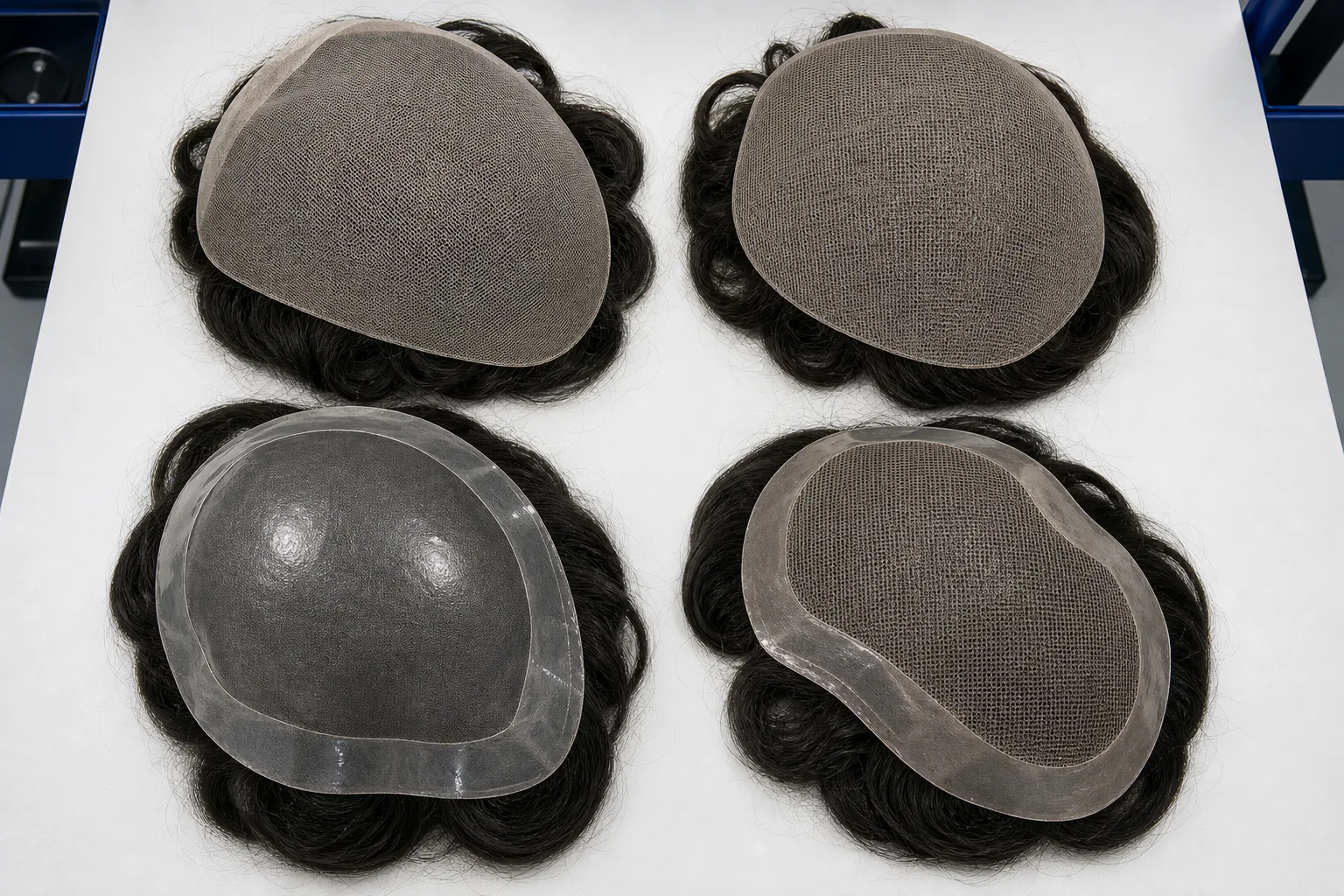
Compare lace, PU or skin, mono, and hybrid hair system base directions through complete wholesale specifications, samples, and approval records.
Use Base Names As Construction Directions
Lace, PU or skin, mono, and hybrid identify broad ways a system can be constructed. They do not by themselves define the complete product or establish a universal performance ranking.
Material names and labels can vary by supplier. Ask what material, zones, edge direction, reinforcement, base shape, and size belong to the exact sample being discussed.
Connect The Base To The Service Workflow
Record the intended client direction, technician experience, attachment and removal workflow, maintenance plan, climate considerations supplied by the buyer, and the way the system will be fitted and serviced.
These questions help organize a relevant sample direction without turning the base name into a comfort, durability, medical, or adhesive-safety promise.
Specify The Hair And Ventilation Together
Keep front, parting, crown, and overall hair direction with the requested texture, length, density direction, color, gray direction, and visible finish.
The same base label can produce a different finished result when the zones, edge details, ventilation direction, hair specification, and distribution change.
Approve A Complete Sample Record
Review the physical sample against the written base construction, shape, size, hair direction, density, color, gray direction, and technician notes. Photograph the details that will matter during later comparison.
Keep the supplier description, sample ID, requested revisions, final accepted direction, reviewer, and date together so production and repeat orders refer to the same evidence.