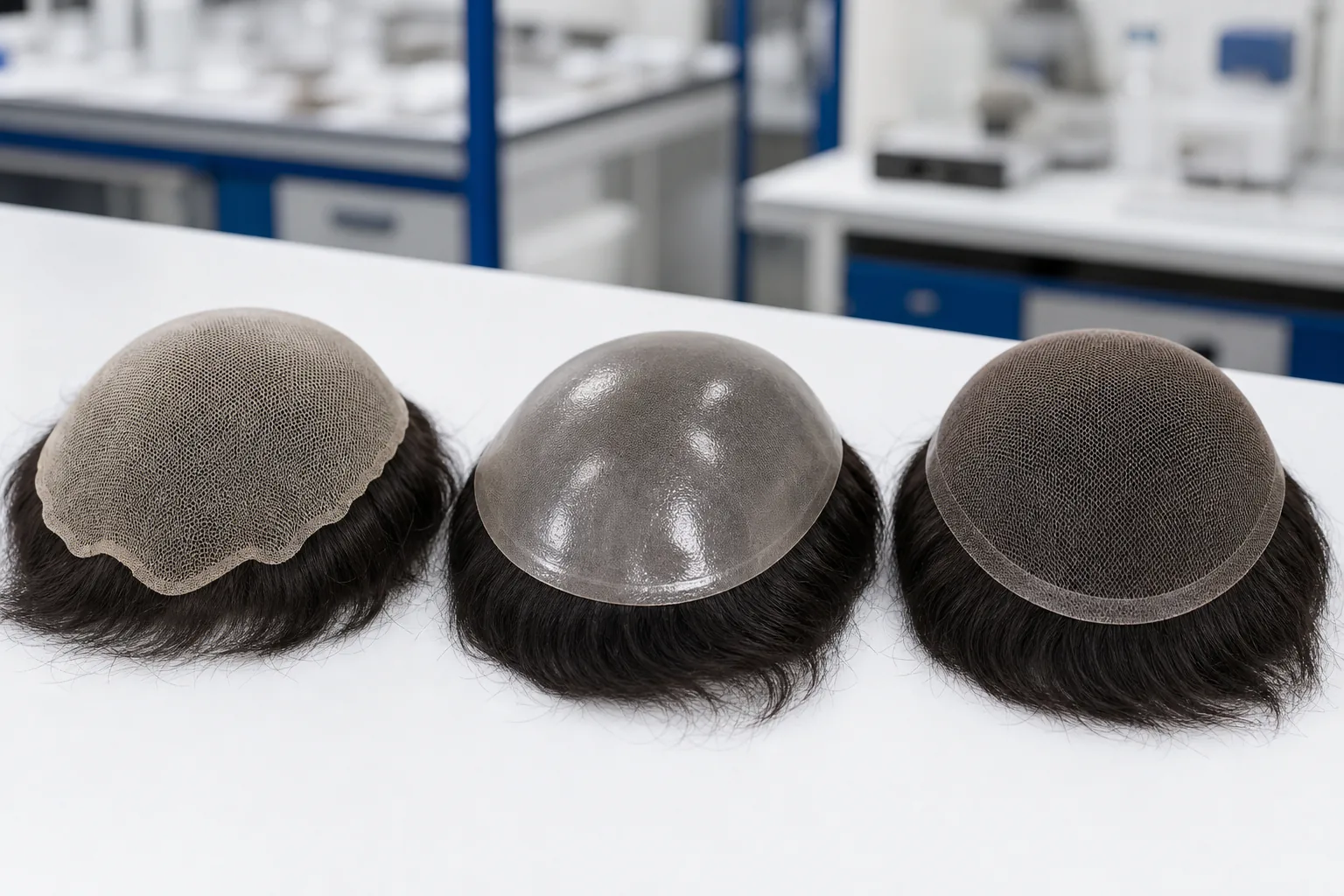
Men's hair system base examples reviewed for stock and custom clinic supply planning

Clinic supply planning

Stock vs Custom Hair Systems For Clinics

Stock hair systems use predefined specifications whose current availability is confirmed per inquiry, while custom systems are built around buyer-supplied requirements and an approved reference. Clinics should compare client matching, base construction, pattern or measurements, hair direction, density, color and gray direction, sample approval, identification, packaging, and reorder records before choosing either or a combined program.

Compare stock, custom, and combined men's hair system programs through specifications, samples, client matching, approval, packing, and reorder records.

Define What Stock Means For The Request

A stock program starts from predefined product specifications such as base direction, shape, size, hair details, color direction, and system identification. The exact current availability is confirmed per inquiry rather than assumed from a general category name.

Ask the supplier to identify which fields are fixed, which can be selected, which sample represents the system, and how the same reference is used for a reorder.

Build Custom Requests From Complete Client Records

A custom request needs the buyer's base pattern or measurements, construction and zones, edge details, hair direction, texture, length, density direction, color and gray direction, and relevant technician notes.

Photographs, swatches, or an existing sample can support the brief, but the accepted requirements and later changes should remain written and tied to one system ID.

Use A Combined Program Deliberately

Some clinics may organize predefined systems for recurring directions and use custom records for requirements outside that opening range. Keep the product IDs, client matching rules, sample references, and packing labels distinct.

A combined program is clearer when staff can tell which decisions belong to the supplier's predefined record and which belong to the buyer's custom approval.

Protect Approval And Reorder Control

For every system, record construction, shape, size, hair direction, texture, length, density, color, gray direction, packaging, sample or reference, requested revisions, and dated approval.

On a reorder, identify the previous approved record first and list changes separately. This gives sales, production, quality control, and clinic staff a common reference for the next discussion.

Comparison worksheet

Clinic Program Planning Comparison

Use the same fields for each supplier, sample, or private-label decision.

ProgramDefine before inquiryControl for approval and reorder
ProgramStock
Define before inquiryTarget clients and suitable predefined specifications
Control for approval and reorderSupplier system ID, current confirmed details, sample reference, and packaging
ProgramCustom
Define before inquiryPattern or measurements, construction, direction, hair specification, color, gray, and technician notes
Control for approval and reorderComplete written record, sample or reference, revisions, and dated approval
ProgramCombined
Define before inquiryWhich client directions use predefined systems and which require custom records
Control for approval and reorderSeparate IDs, matching rules, packing labels, approval records, and changes

Buyer checklist

Clinic Hair System Inquiry Checklist

  • Clinic market and client direction
  • Stock, custom, or combined program
  • Base construction, shape, and size
  • Pattern or measurement method where required
  • Hair direction, texture, length, and density
  • Color and gray direction with references
  • Sample priorities, system IDs, packaging, and dated approval needs

Factory planning note

Confirm The Details For Your Exact Request

Availability and commercial details are confirmed per request because they depend on the product, specification, buying stage, and destination.

Structured WhatsApp request

Discuss Your Men's hair systems Requirements

Open WhatsApp with the guide source already included, then add the market, buying stage, and requirements you want to discuss.