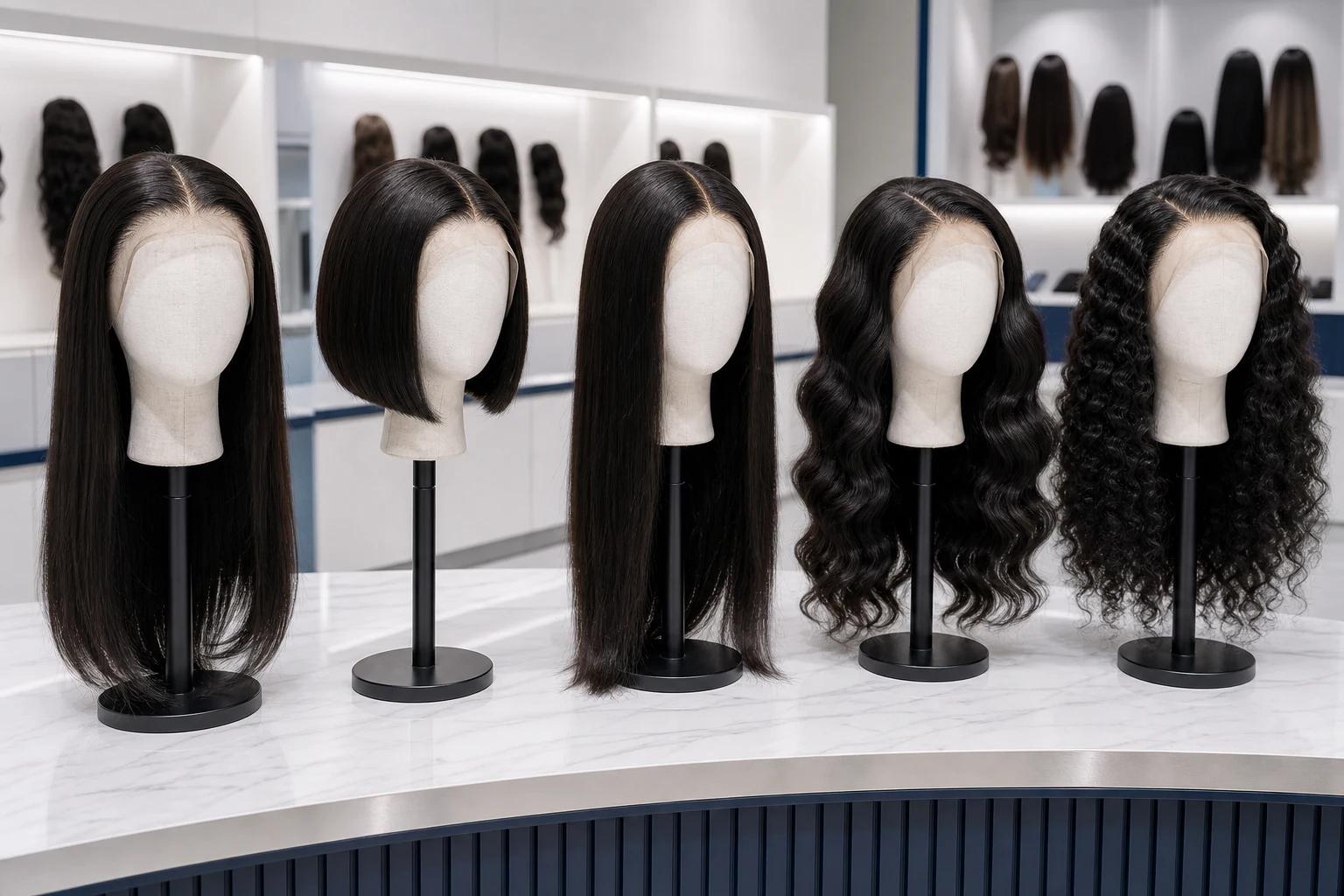
Compare wig density labels, cap construction, length, texture, hair distribution, sample references, and buyer-market expectations before ordering.
Treat The Percentage As A Supplier Reference
Density labels communicate a fullness direction within a supplier's own product system. The visual result for 150%, 180%, or another label can vary by manufacturer, cap size, construction method, hair length, texture, and distribution.
Ask for the supplier's sample or visual reference for the exact construction rather than comparing percentage labels from different catalogs as if they were standardized measurements.
Specify The Construction Around The Density
Record lace type and area, cap construction, cap size direction, hairline, parting, texture, lengths, layers, and where fullness should be distributed across the finished wig.
Long straight hair, short curls, layered styles, and different cap structures can present the same density direction differently. The complete product specification is the meaningful comparison.
Evaluate The Finished Sample From Useful Angles
Review the front, parting, crown, sides, back, ends, and transition between lengths on the intended mannequin or fit reference. Note whether the distribution supports the buyer market and styling direction.
Photographs and video should use consistent lighting, distance, positioning, and styling so revisions can be compared without changing the presentation conditions.
Record The Approved Density Direction
Keep the density label together with the supplier, construction, cap, texture, lengths, distribution notes, sample ID, photographs, and requested changes. A percentage by itself is not enough for a repeat order.
Availability, sample cost, timing, MOQ, and pricing should be confirmed for the exact wig request because these details can change by construction and buying stage.